Digital Waqf governance with verifiable impact tracking.
Waqf (Islamic endowment) is among the most powerful instruments in Islamic finance. And historically the hardest to govern transparently. ZeroH is building a productised Waqf solution template: multi-jurisdiction governance, beneficiary impact tracking, NGO oversight, and cryptographic evidence for donors and supervisors. Pilot deployment in development with a development finance institution.
Waqf transparency is structurally broken
Donors hand capital to mutawallis (Waqf administrators) and hope. NGOs deliver services and report periodically. Supervisors review long after the fact. The verifiable accountability that Waqf jurisprudence describes is rarely operationally achievable.
Annual
typical donor-to-impact reporting cadence
Donor-to-impact opacity
Donors making Waqf endowments rarely have line-of-sight to actual beneficiary outcomes. Reporting cadence is annual at best. Aggregated. Vendor-asserted. The capital reaches the field; the evidence trail dissolves.
4+
jurisdictions per typical international Waqf
Cross-jurisdiction governance fragility
Waqf structures often span donor jurisdictions (Gulf, Malaysia, UK), mutawalli oversight (local Waqf board), NGO operations (host country), and beneficiary geography. Each jurisdiction has its own rules. Compliance evidence collapses across the chain.
0
Waqf platforms offering cryptographic non-disclosure proof
Beneficiary data without proof
NGOs collect beneficiary data. Sensitive, often involving vulnerable populations. Donors and supervisors want assurance that benefits reached intended recipients. NGOs want to protect beneficiary privacy. Without cryptographic non-disclosure proof, the two sit in tension.
The ZeroH Waqf stack (in development)
Productised solution template covering Waqf governance, mutawalli operations, NGO oversight, and cryptographic donor reporting.
ZeroH Platform. Waqf Template
In DevelopmentMulti-stakeholder Waqf governance with verifiable impact evidence
ZeroH decomposes the Waqf deed and operating arrangements into machine-enforceable obligations across donor, mutawalli, NGO, and supervisor roles. Beneficiary impact captured at the field level with privacy-preserving evidence. Every disbursement, every outcome, every Sharia-board check tamper-evidently recorded.
- ✓Waqf deed decomposition into machine-enforceable obligations
- ✓Multi-role workflows: donor portal, mutawalli operations, NGO field reporting, supervisor oversight
- ✓Beneficiary impact evidence with privacy preservation
- ✓Cross-jurisdiction compliance mapping (donor, mutawalli, NGO, beneficiary jurisdictions)
- ✓Tamper-evident audit trail across the Waqf lifecycle
- ✓Sharia board oversight surface for ongoing supervision
ZeroH Disclosure
AlphaBeneficiary privacy with donor transparency
Waqf donors want assurance of impact. Beneficiaries have a right to privacy. ZeroH Disclosure solves both. Cryptographic non-disclosure proof at field level, selective disclosure with cryptographic proof for donor reporting that proves the impact without exposing the beneficiary.
- ✓Field-level beneficiary PII redaction
- ✓Selective disclosure with cryptographic proof (in development) for donor / supervisor / public reporting
- ✓On-premise data residency aligned to beneficiary jurisdiction rules
- ✓Cryptographic evidence of impact (designed) without exposing beneficiary identity
Ask Ali
BetaWaqf jurisprudence built into the operating workflow
Waqf jurisprudence is rich and jurisdiction-specific. Ask Ali handles the Sharia-question moments. Multi-madhahib reasoning on Waqf rules, source-attributed analysis on permissible uses, edge-case escalation to Sharia board.
- ✓AAOIFI Waqf-relevant standard analysis
- ✓Multi-madhahib reasoning on Waqf rules across jurisdictions
- ✓Source-attributed answers for mutawalli and Sharia board
- ✓Edge-case analysis for novel Waqf structures (cash Waqf, corporate Waqf)
Donor capital → beneficiary impact, with cryptographic proof at every step
The transparency that Waqf jurisprudence describes, finally operationally achievable.
Your Waqf deed becomes the operational runtime
The Waqf deed. Beneficiary categories, permitted uses, governance arrangements, succession rules. Is decomposed into machine-enforceable obligations. The intent that founded the Waqf is the operational policy that governs every disbursement.
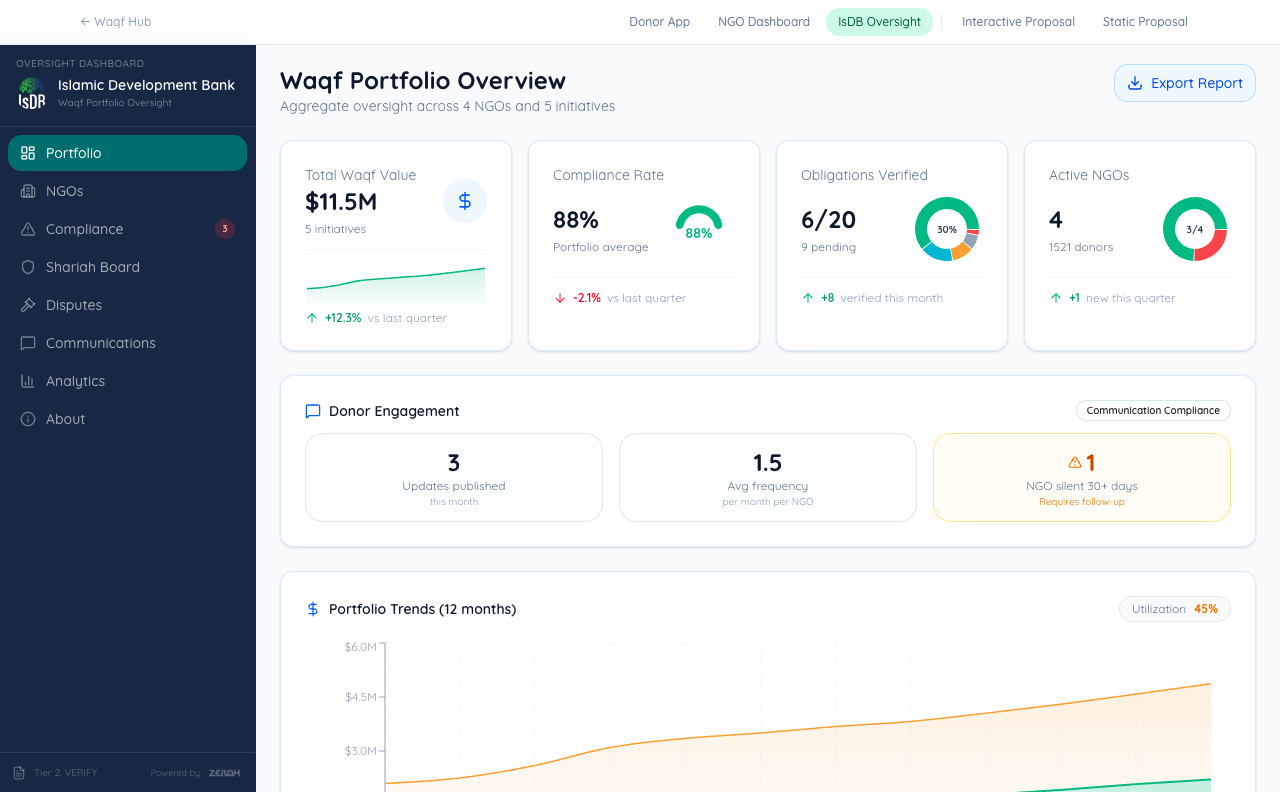
Donors see real impact. Beneficiaries keep privacy.
Donors receive cryptographic evidence of impact. That funds reached intended categories of beneficiaries, in intended jurisdictions, achieving intended outcomes. Selective disclosure with cryptographic proof (in development) is designed to evidence the impact without exposing individual beneficiary identity.
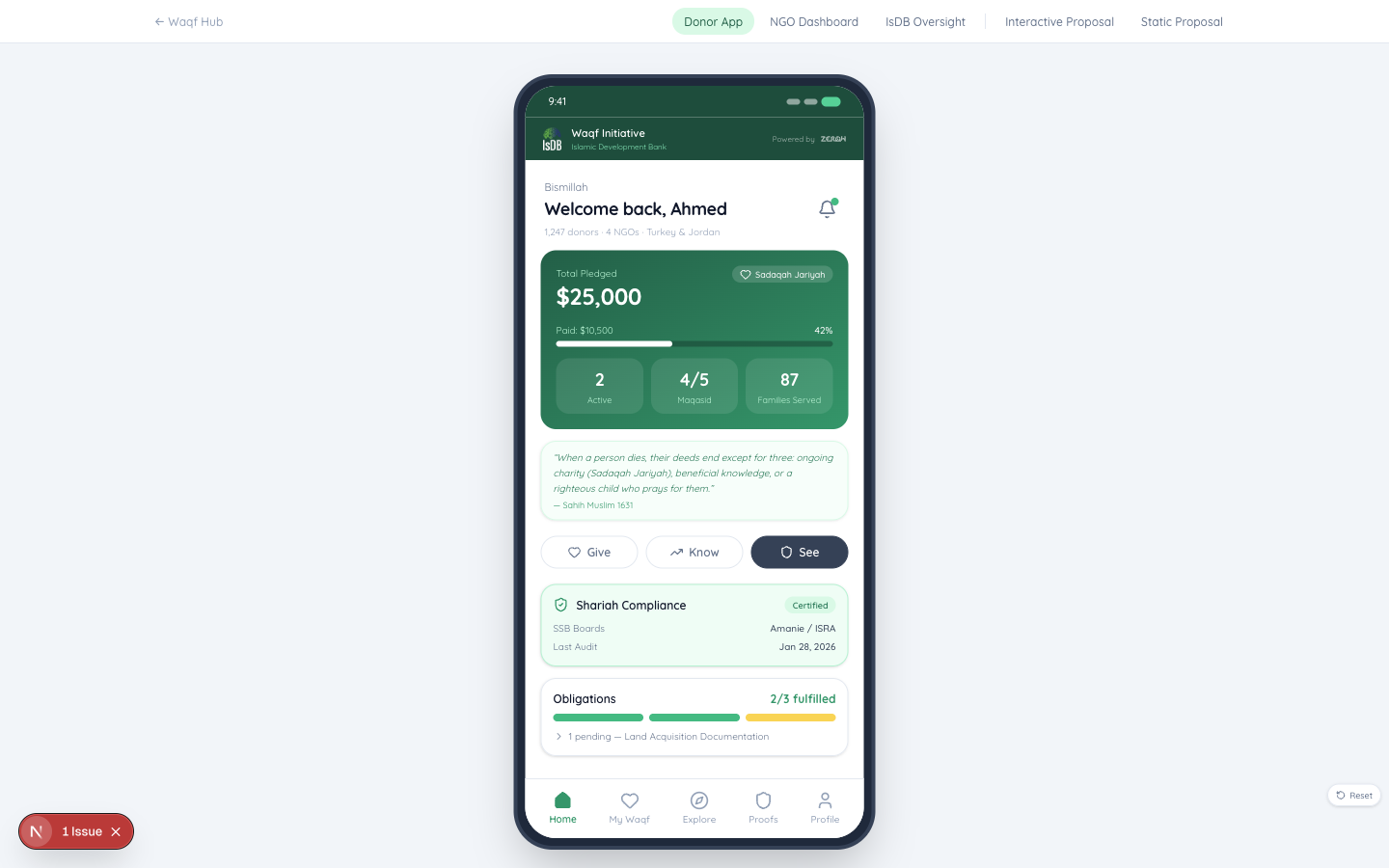
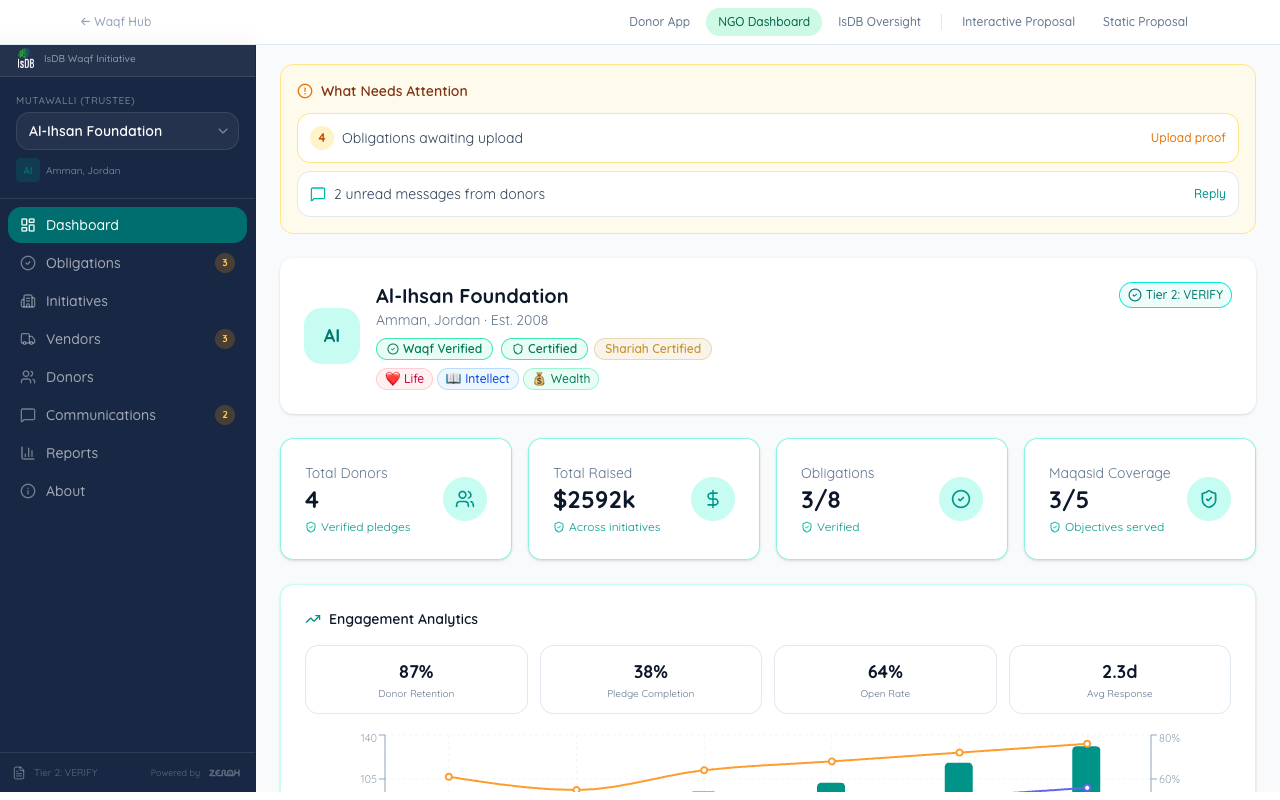
Donor, mutawalli, NGO, and supervisor in one platform
Cross-border Waqf structures span jurisdictions with different rules. ZeroH maps the governance arrangement once, then enforces the appropriate rules at the appropriate moments. With cryptographic evidence each jurisdiction's supervisor will accept.
Frequently Asked Questions
Explore by Role
See how ZeroH serves different roles in your organisation.
CISOs
ZeroH gives CISOs at regulated banks, insurers, and asset managers a verifiable safety layer for the AI tools their staf
Data Protection Officers
ZeroH gives DPOs cryptographic, third-party-verifiable evidence designed to show that personal data was redacted before
AI Risk Officers
ZeroH gives AI Risk Officers cryptographic, third-party-verifiable evidence of AI governance. Aligned to PRA SS1/23 mode
Compliance Officers
ZeroH automates compliance tracking, surfaces regulatory changes before they become gaps, and generates audit-ready evid
Shariah Boards
ZeroH maintains a living record of every fatwa, approval condition, and parameter boundary. Your board focuses on schola
CFOs and Finance Leaders
Self-service deployment in weeks, not months. No consultants required. Verifiable evidence that satisfies regulators and
Risk Managers
ZeroH maps Shariah non-compliance risk alongside your operational, regulatory, and reputational risk frameworks. One pla
Auditors
Continuous Shariah compliance monitoring that flags product drift the moment it occurs, generates audit-ready evidence t
Digital Bank Formation
ZeroH is validated inside the Qatar Financial Centre Digital Assets Lab for verifiable Shariah-compliance audit trails i
Explore by Region
See how ZeroH operates in key Islamic finance markets.
Saudi Arabia
SAMA's Shariah Governance Framework requires independent Shariah boards, documented compliance processes, and structured
United Arab Emirates
CBUAE, ADGM, and DIFC each operate distinct regulatory frameworks for Islamic finance and digital assets. ZeroH maintain
Qatar
ZeroH is validated inside the Qatar Financial Centre Digital Assets Lab — Qatar's international financial hub. QCB's AI
Bahrain
The Central Bank of Bahrain's Rulebook Volume 2 sets some of the most detailed Shariah governance requirements globally.
Kuwait
Kuwait's Islamic banking sector manages over $140B in assets under CBK Shariah governance instructions and AAOIFI standa
Malaysia
BNM's Shariah Governance Policy Document, the Securities Commission's Capital Markets Plan 2026-2030, and PDPA create ov
Indonesia
OJK Shariah governance regulations, DSN-MUI fatwa requirements, and Bank Indonesia oversight create layered compliance o
Bangladesh
With $47B in Islamic banking assets, 10 full-fledged Islamic banks, and over 50 Islamic banking windows, Bangladesh carr
Pakistan
With $50B+ in Islamic banking assets, five full-fledged Islamic banks, and an SBP-mandated Shariah governance framework,
United Kingdom
With $100B+ in Islamic finance assets, five dedicated Islamic banks, and an FCA regulatory framework that demands docume
Digital Waqf, properly governed.
We are building this with select development finance institutions and Waqf operators. Talk to us if you have an active Waqf governance need. Early access available for the right partners.